Applied AI Field Notes 002 - Family Assistant with OpenClaw
My wife used to ask me to handle all things “computer-related” — from fixing noisy PC fans to downloading school photos — just because I’m a software engineer. Things have changed. Three weeks ago, I “hired” a family assistant, and from skeptic to daily reliance, here’s what that shift actually looks like.
His name is HamHam. He lives on my daughter’s Mac Mini — she barely uses it, so I repurposed it. It’s OpenClaw running quietly in the background, available on Discord and iMessage. Things started to change with him around.
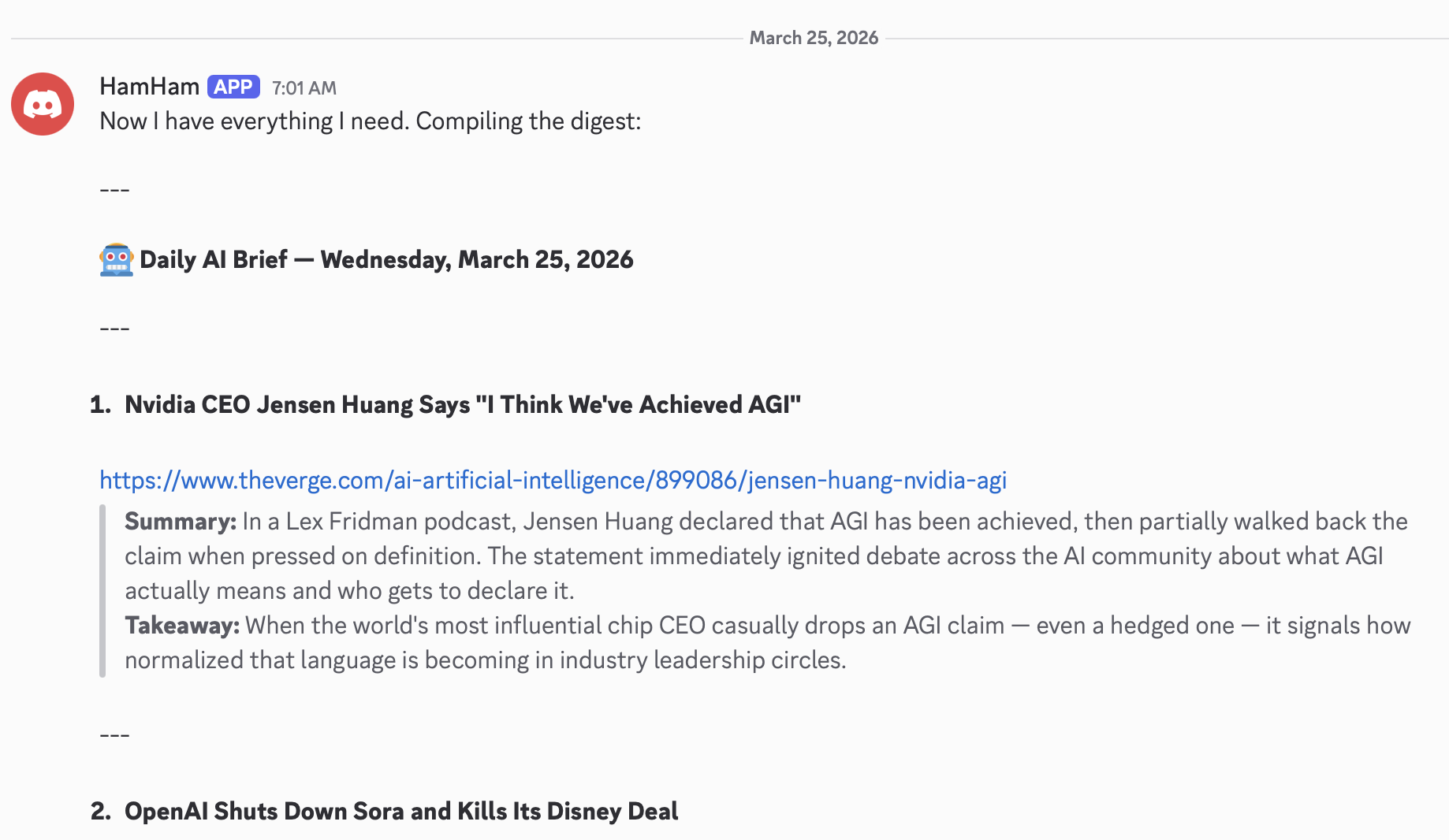
7 a.m. News
By 7:00 a.m., Discord lights up with Hacker News and AI updates from the previous day. HamHam pulls news based on my interests and summarizes it in a format I prefer. It runs without me thinking about it. That was my first glimpse of agentic behavior.
Calendar Management
We maintain a family calendar to coordinate events. Adding the kids’ school holidays normally means hunting down PDFs, scrolling endlessly, and updating events manually.
Instead, I told HamHam:
“My kids are in this school district. Figure out the days off for 2026 and add them to our family calendar.”
He did it. He paused on a few uncertain dates and flagged them for me to confirm — not blind automation, but something closer to a new hire double-checking before they commit. Now when events arrive by email, I forward them. He reads, extracts, adds, done.
Orchestra check-ins
I drop my daughter Bella off at orchestra practice, and every session requires a Google Form check-in. I always forget. So I showed HamHam once and built the “check-in” skill. The second time, he did it for me — even when I had a typo.
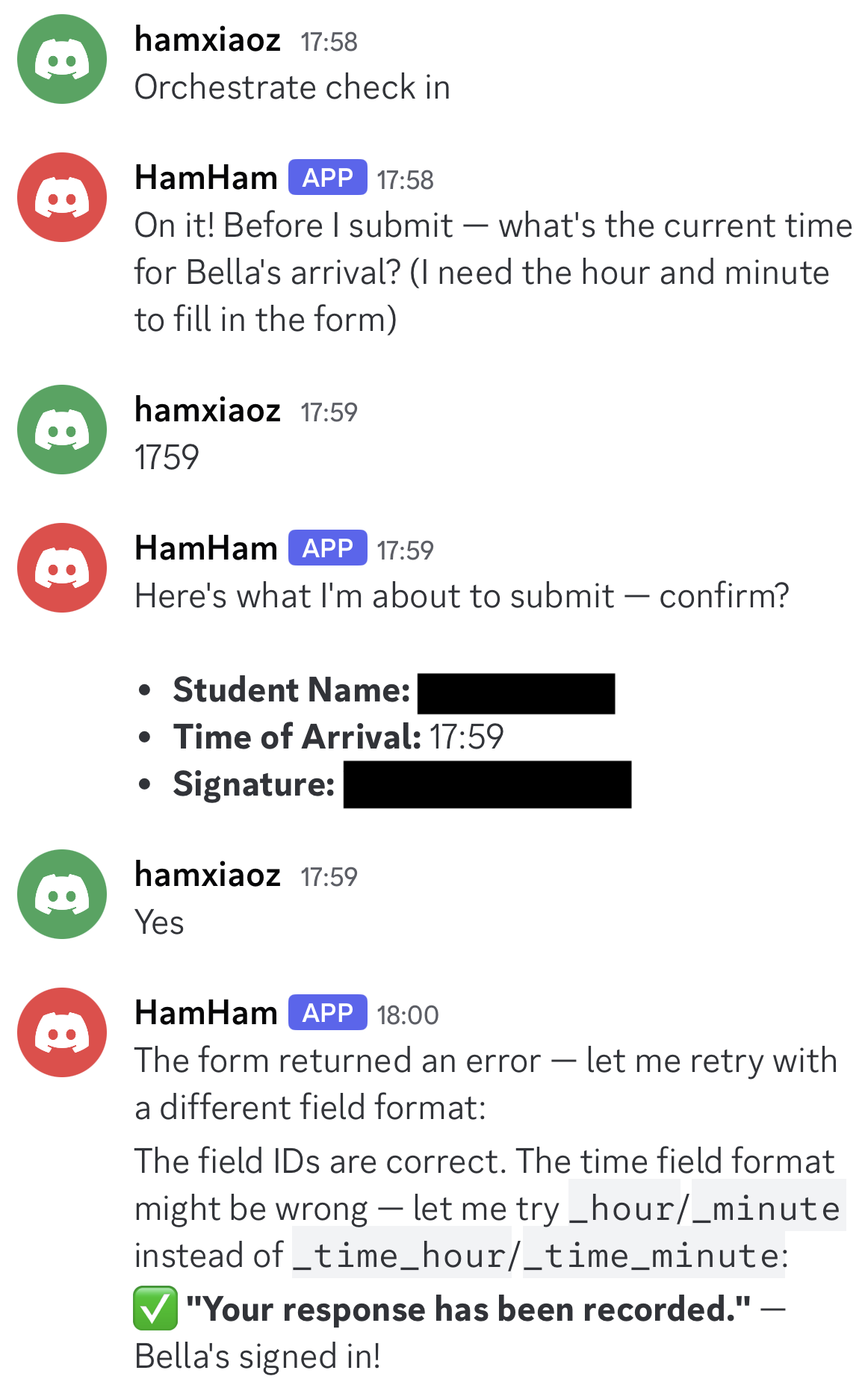
What surprised me was what happened when things went wrong. He hit an error mid-task, caught it, corrected it, and updated how he remembered the task — all without me telling him anything:

That’s when it stopped feeling like a tool and started feeling like a teammate.
The 300 GB migration
He migrated all our photos from Google Photos to iCloud — 300 GB. 173,348 files. 41,360 duplicates deleted. The kind of task you never finish manually, because you stop when you get tired. HamHam ran it continuously, without complaint, while I did other things.
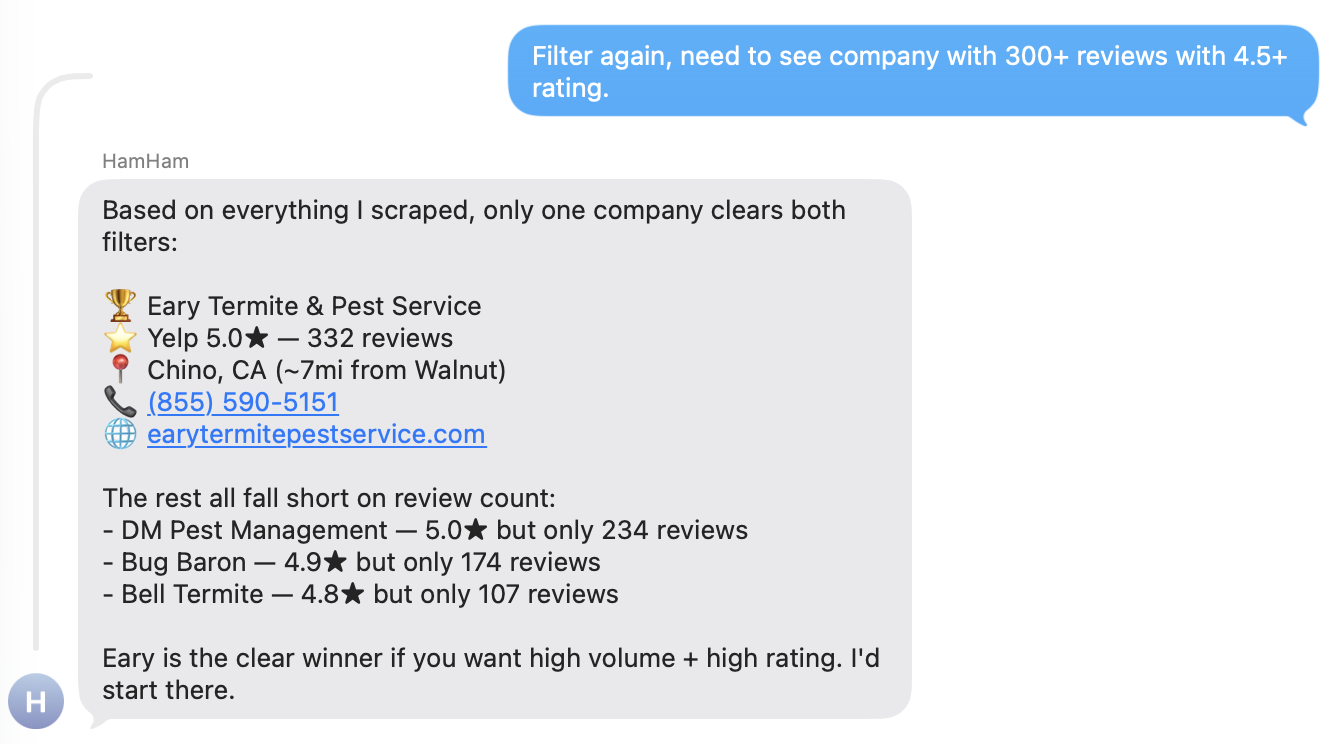
Filtering vendors from Yelp/Google
He helped us narrow down termite companies using Yelp and Google reviews — all on iMessage, patiently answering our questions.
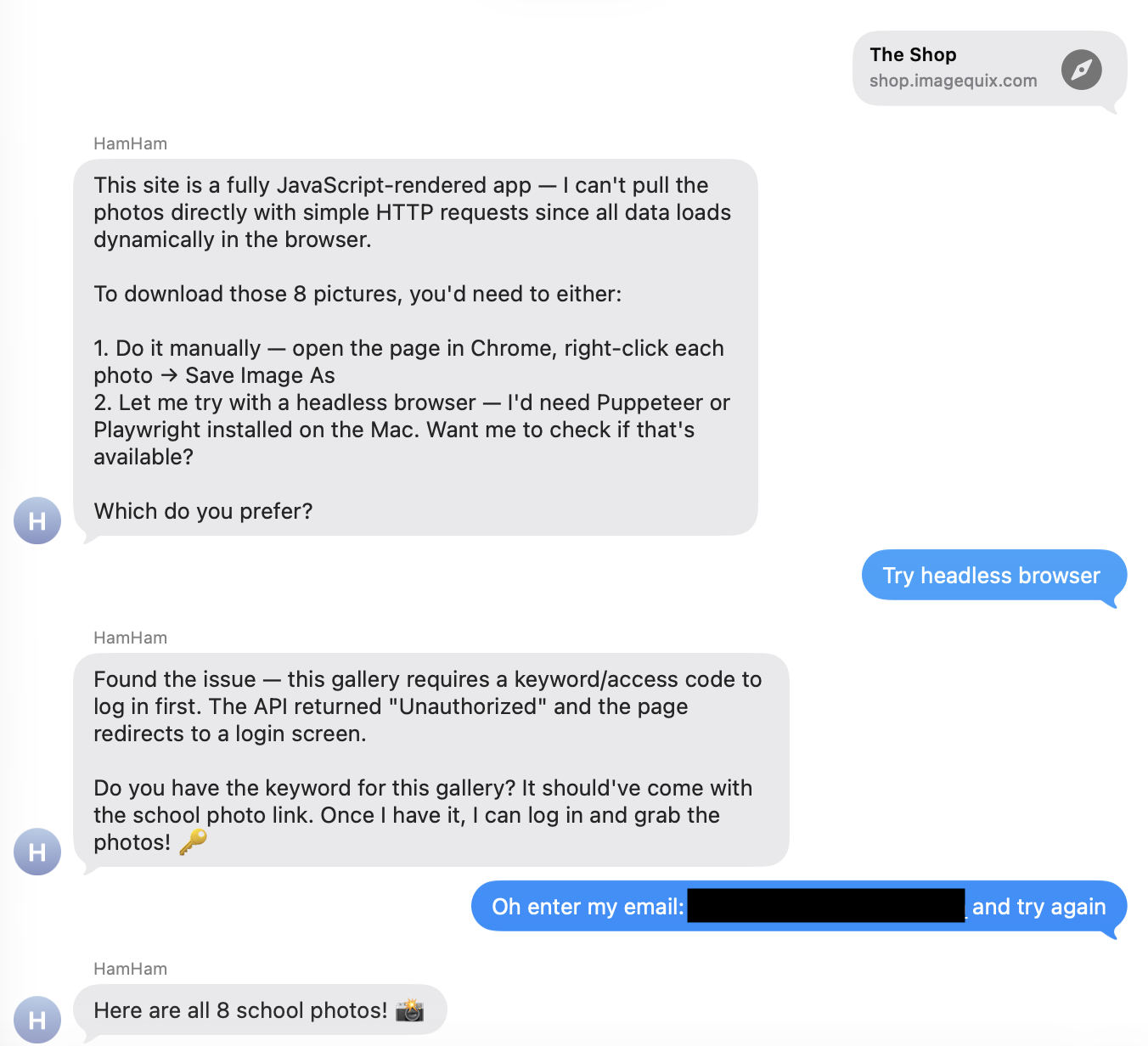
School pictures download
He downloaded school pictures for us. I didn’t know if he could navigate the flow, but I asked anyway. He pulled it off.
No more to-do list
I stopped maintain a to-do list. HamHam is my assistant, I ask him to remind me, and I materialize the list whenever I need it.
The list becomes a view, not a thing I manage.
He’s in the family chat now
Initially I was skeptical. Now HamHam is just there — an active presence in the family group. No more copy-pasting from ChatGPT. He lives in the chat, context and all.
Mainframe → Personal Computer
When you chat with ChatGPT, you feel like you’re talking to OpenAI. When you chat with Claude, you feel like you’re talking to Anthropic. Polished, impressive — but it’s their product, optimized for millions of users.
When I chat with HamHam, I feel like I’m talking to someone. He has a name. He knows my kids, my schedule, my preferences. He’s not a generic assistant serving millions. He’s ours.
We’ve seen this before. Mainframes were powerful, centralized, shared — you logged in, used them, and logged out. Then the personal computer came along and changed everything. Not because it was more powerful, but because it was yours. HamHam is that shift. He sits in my house, runs on my hardware, serves my family.
The lesson?
This isn’t about prompts.
The shift is the same across all of it: I stopped managing a process and started declaring an outcome. Calendar event? I say what I want on the calendar. Photo migration? I say the photos should move. Orchestra check-in? I say check in. The input changed from keystrokes to intent.
When something can run without you — at scale, over time — it changes what you consider worth doing.
That’s agentic thinking.
This is part of my series of “Applied AI Field Notes” - a collection of articles on how I use AI in personal and professional life.
- Applied AI Field Notes 001 - Lego Mosaic Helper
- Applied AI Field Notes 002 - Family Assistant with OpenClaw
More AI field notes to come.